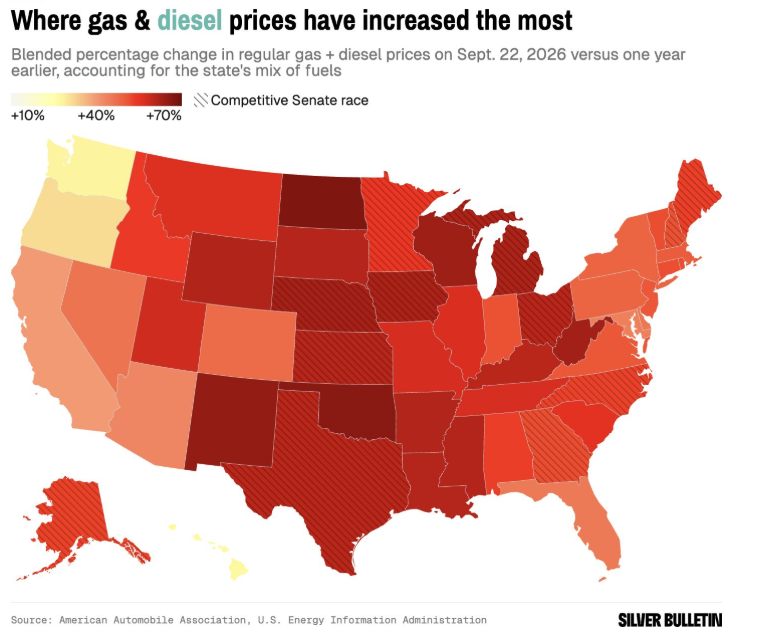
The chart of the week shows how gas and diesel prices increased across the United States on September 22, 2026, compared with the same date one year earlier. The darker red states experienced larger increases, with some rising by more than 50%, while the lighter-colored states saw smaller increases.
Gasoline and diesel prices often move together because both are produced from crude oil, although diesel generally requires additional refining processes and is also strongly affected by demand from trucking, agriculture, and other industries. When gas prices rise, consumers feel the impact directly because they have to pay more to fill their vehicles. Higher diesel prices can have an even broader effect because diesel is widely used to transport goods across the country.
As transportation costs increase, businesses may raise the prices of their products and services to cover those higher expenses, contributing to overall inflation. Therefore, even if consumers typically pay less attention to diesel prices than gas prices, it should be the opposite as rising diesel costs can eventually affect the prices of many of the goods we buy.