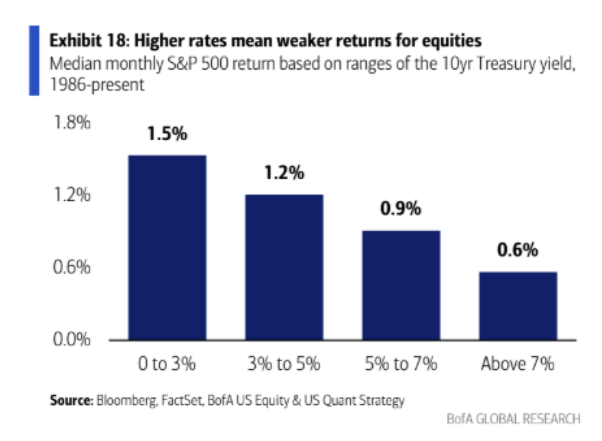
The chart of the week shows that higher interest rates are generally associated with weaker returns for stocks. As we saw last week, the 10-year U.S. Treasury yield breached the 5% level. Looking at the data from 1986 to the present, we can see that, historically, higher 10-year Treasury yields have been associated with lower stock market returns. While returns have declined as interest rates have increased, the median monthly return when the 10-year yield was between 5% and 7% was still 0.9%, which would equate to more than 10% annually if that monthly return were sustained.
Higher interest rates can also reduce stock valuations because future corporate earnings are discounted at a higher rate, making those future earnings worth less in today’s dollars. This is the opposite effect of what we have seen over the years as interest rates declined, which helped support higher stock valuations. At the same time, higher interest rates make bonds more attractive because investors can earn higher returns with relatively less risk. As bonds become more appealing, investors may have less incentive to take on the additional risk associated with stocks.